randumb.
form filler with 58 locales and country-coherent identities.
right-click any form field. picks a name + address + phone + email + company that all live in the same country. no more US-named-john at a French address with a UK postcode.


shortest path? open the install guide.
v1.0.0·published 2026·manifest v3
four things, in four lines.
58 locales
names, surnames, street formats, postcode shapes, phone formats — all match the locale.
country-coherent identities
us-john lives at a us address with a us phone with a us postcode — never mixed.
right-click + popup
right-click on any input or button in the popup to fill the focused field.
bulk csv generator
10/100/1000 rows in one click. download as csv. zero analytics.
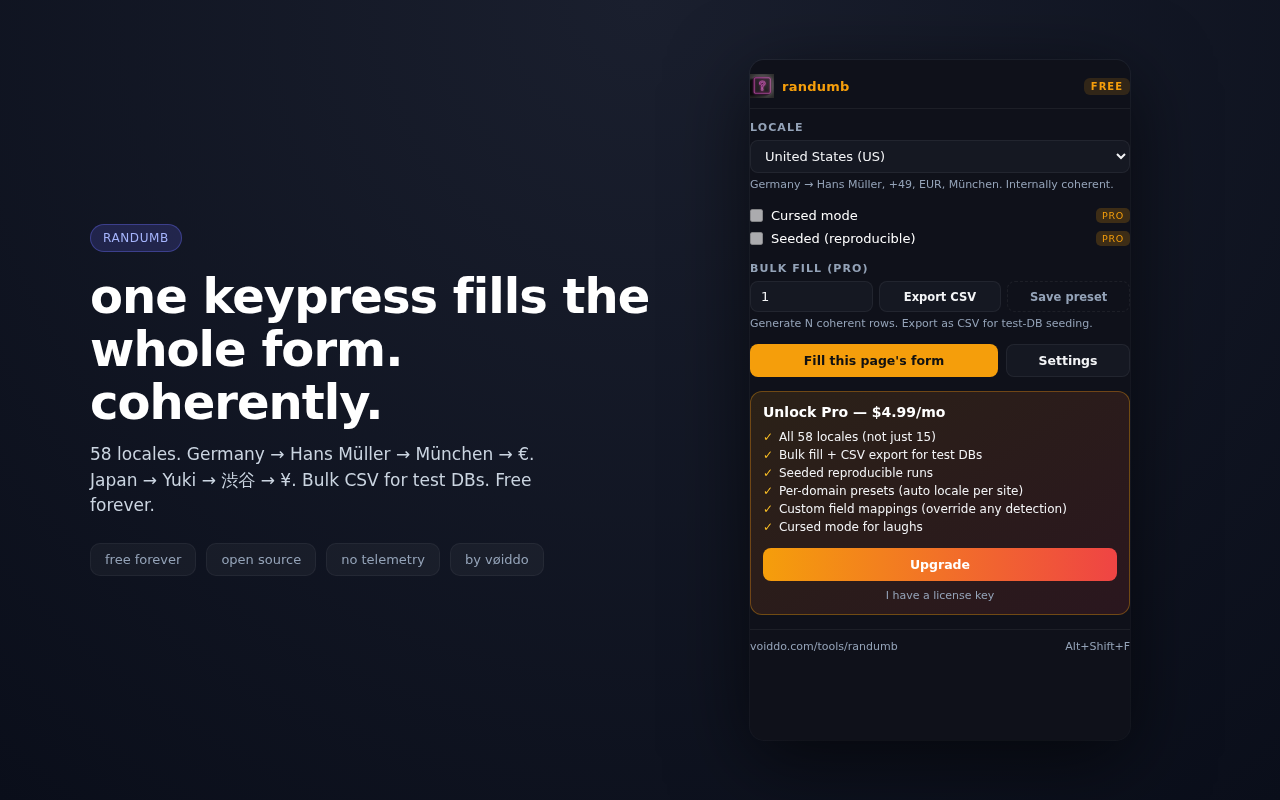
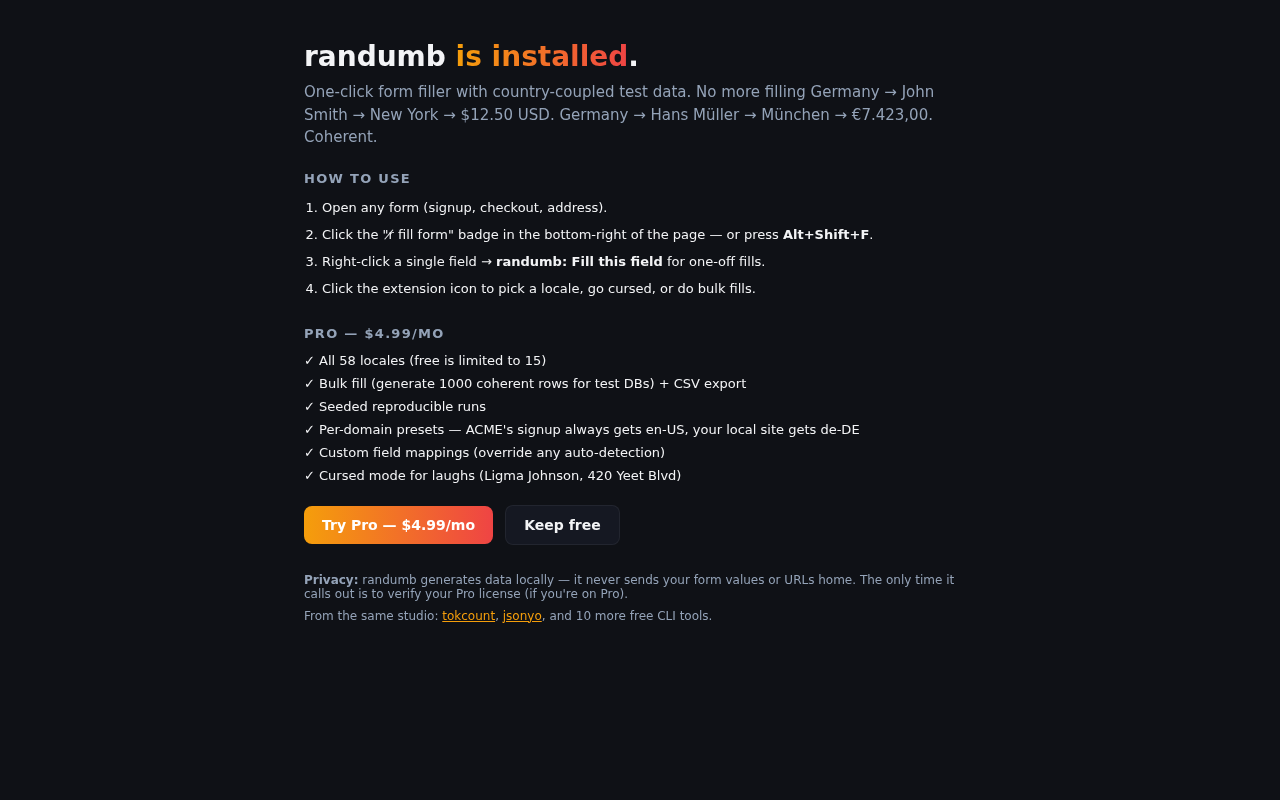
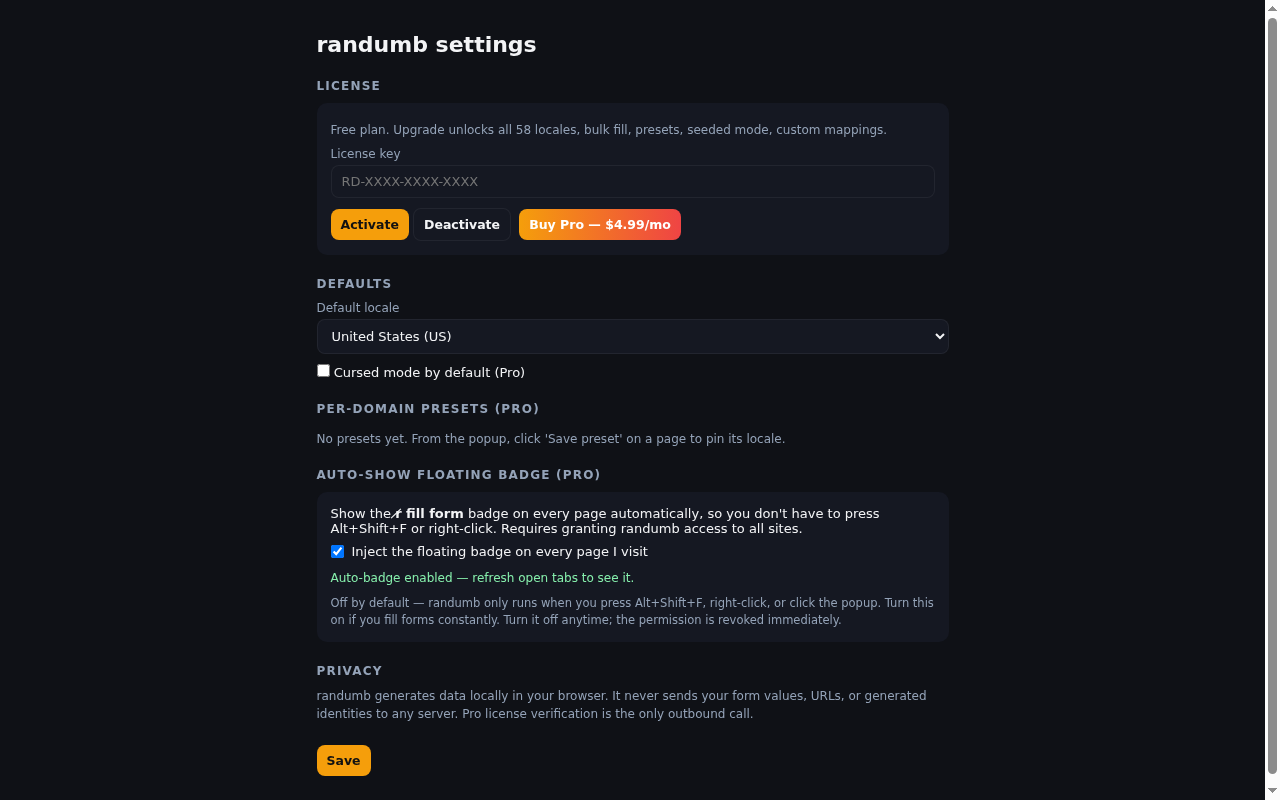
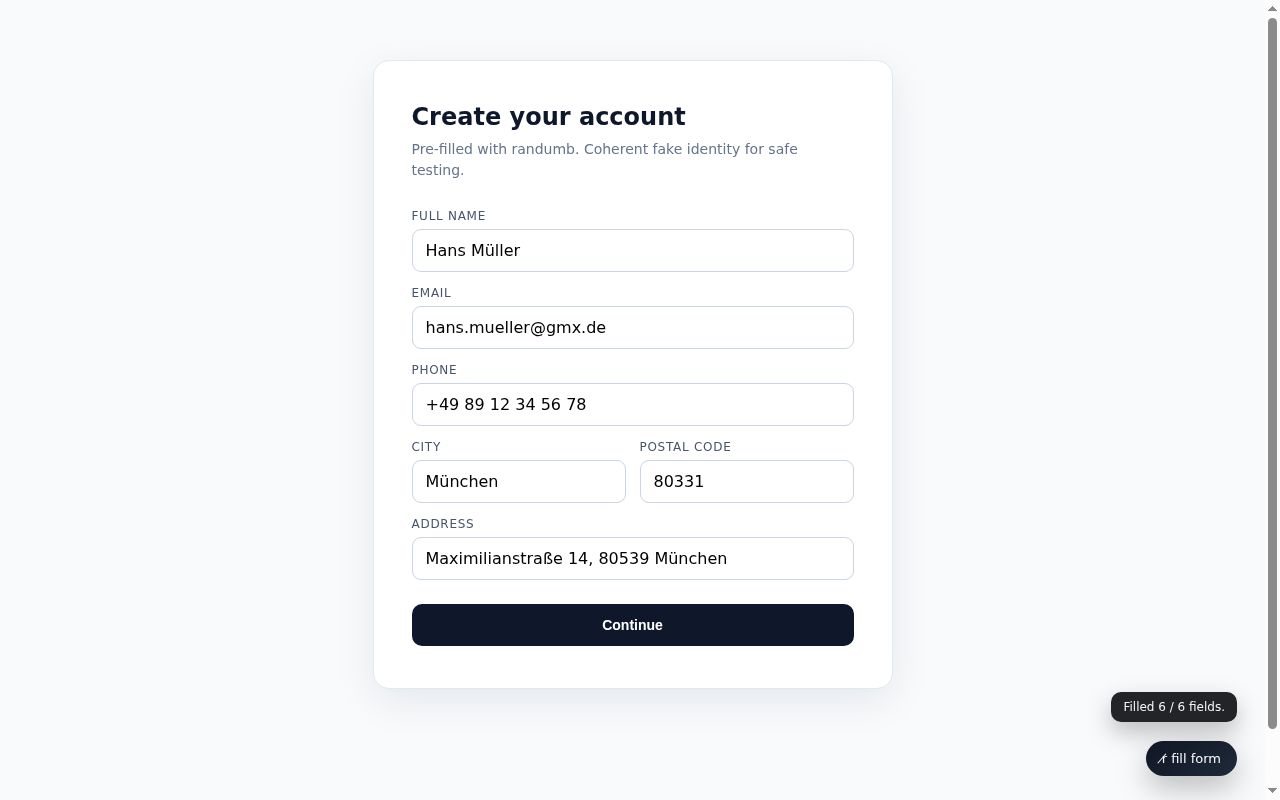
four shots, no edits.
unedited screenshots from the actual installed extension. click any tile to open the full-resolution png.
free core. paid power.
randumb stays free for the common one-click form-filling workflow. paid tiers are for people who need serious test data: all 58 locales, bulk CSV export, saved presets, seeded reproducible fixtures, and team libraries.
required pages.
every extension here ships with clear privacy, terms, contact and refund pages. no hidden terms, no opt-out cookies, no email-grab on first install.
three browsers.
edge add-ons listing is public.
prefer the command line? randumb also ships as a free npm cli — 58 locales, seeded fixtures, luhn-valid cards, pipe-friendly →
comparing options? randumb vs Fake Filler vs Mockaroo — locale coherence, browser support and CSV export compared →